Husband Can Cook: 10 Easy Meals a Beginner Can Make Tonight
A husband can cook dinner—even if he has never done more than make toast. Cooking is not a talent reserved for people who grew up in the kitchen; it is a practical skill built one meal at a time. The easiest way to begin is to choose a familiar dish, follow a short recipe, and make it again until the steps feel natural.
If you are looking for easy meals a husband can cook, start with food that is forgiving and uses ingredients you can find at an ordinary supermarket. Tomato pasta, bean quesadillas, egg fried rice, a simple curry and a tray-baked dinner are all good first choices. None requires expensive equipment or advanced knife skills, and most can be on the table in about 15 to 35 minutes.
The goal is not to produce a restaurant-perfect plate on the first try. It is to make a safe, satisfying meal, learn what worked and take responsibility for the whole job—from checking what is in the fridge to tidying the kitchen afterwards. Below are ten approachable dinner ideas, practical kitchen habits and a simple starter plan to make cooking feel manageable.
Quick answer: what can a beginner cook tonight?
For a first dinner, choose the option that best matches the time and ingredients available:
| Meal | Approximate time | Why it is beginner-friendly |
|---|---|---|
| Tomato and basil pasta | 20 minutes | Familiar ingredients and a simple sauce |
| Cheese and bean quesadillas | 15 minutes | Mostly assembling, then browning in a pan |
| Egg fried rice | 15 minutes | A microwave rice pouch makes the timing easy |
| Chickpea coconut curry | 25 minutes | Tinned ingredients and one pan |
| Chicken fajita traybake | 30 minutes | The oven does most of the work |
| Omelette with spinach and cheese | 10 minutes | Quick, inexpensive and easy to customise |
If you feel nervous, make the pasta or quesadillas first. They give you a clear sequence of steps without requiring you to manage several pans at once.
What makes a good first meal?
A beginner-friendly meal has a short ingredient list, clear instructions and a little room for error. A sauce can be loosened with water; vegetables can be swapped for what is already in the fridge; and a dish like quesadillas can still taste good even if the filling is not perfectly measured. One-pan recipes are especially useful because there is less equipment to manage and less washing up afterwards.
Choose a meal that suits the people eating it, too. Ask about allergies, dislikes and dietary needs before shopping. If someone does not eat meat, for example, the chickpea curry, bean quesadillas, omelette or black bean chilli below can make a complete dinner. Agreeing on the meal in advance prevents the cook from having to guess what everyone wants at the last minute.
Seven habits that make cooking easier
You do not need to master every technique before making dinner. These small habits prevent many common problems and make a new recipe much easier to follow.
- Read the recipe from beginning to end. Check the cooking time, oven temperature, ingredient amounts and any step that needs to happen first. It is frustrating to discover halfway through that the oven should have been preheated or an ingredient is missing.
- Get the ingredients ready before turning on the heat. Put the ingredients on the counter, drain tins, wash produce and chop what needs chopping. This is especially helpful when several things go into a hot pan in quick succession.
- Use moderate heat unless the recipe says otherwise. A pan that is too hot can burn garlic, spices or the outside of a meal before the middle is ready. You can always turn the heat up gradually; rescuing burnt food is harder.
- Taste as you go. Add salt and strong seasonings a little at a time. Taste the sauce or filling before serving, then adjust with a pinch of salt, pepper, lemon juice or herbs if needed.
- Do not crowd the pan. Food piled tightly together tends to steam instead of brown. If a pan looks packed, cook in batches or use a larger tray.
- Use a timer and check doneness. Timings are a guide because ovens, pans and portion sizes vary. For meat and poultry, use a clean food thermometer and follow the safe cooking guidance for your location. In the UK, the Food Standards Agency lists 70°C for two minutes, or an equivalent time-and-temperature combination, as a safe cooking standard. See its cooking guidance.
- Clean as you go. Put wrappers in the bin, rinse sticky utensils and wipe spills while food cooks. Keep raw meat and poultry separate from ready-to-eat foods, wash your hands after handling them, and refrigerate leftovers promptly.
10 easy meals a husband can cook
These recipes are deliberately straightforward. Ingredient amounts serve about two people unless stated otherwise; increase them if you are cooking for more. Check labels for allergens and use the cooking directions on packaged ingredients where relevant.
1. Tomato and basil pasta
Time: 20 minutes | Skill: Boiling pasta and making a simple sauce
You will need: 200 g pasta, 1 tablespoon olive oil, 2 garlic cloves (finely chopped), 1 x 400 g tin chopped tomatoes, 1 teaspoon dried oregano, a handful of fresh basil, salt and black pepper, and grated cheese to serve.
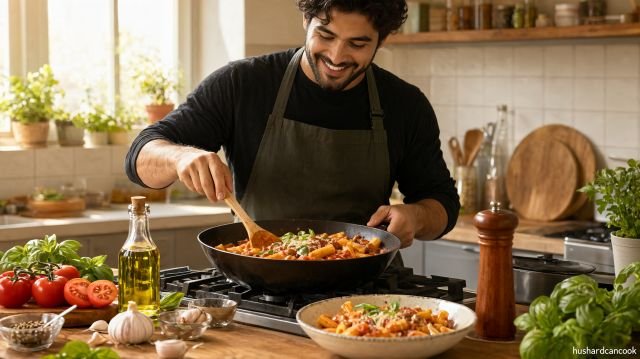
How to make it: Bring a saucepan of salted water to the boil and cook the pasta according to the packet. Before draining, save a small mug of the pasta water. While the pasta cooks, warm the oil in a frying pan over medium-low heat. Add the garlic and stir for about 30 seconds; do not let it turn dark brown. Add the tomatoes, oregano and a little pepper. Simmer for 10 minutes, stirring occasionally. Mix in the drained pasta and a splash of pasta water until the sauce coats it. Tear over the basil and add cheese.
Easy variation: Add a handful of spinach to the sauce near the end, or serve with a bagged salad.
2. Cheese and bean quesadillas
Time: 15 minutes | Skill: Filling and turning a tortilla
You will need: 4 medium tortillas, about 200 g drained black or kidney beans, 150 g grated cheddar, 100 g sweetcorn (optional), a little oil and salsa to serve.
How to make it: Drain and rinse the beans, then mash them lightly with a fork so the filling holds together. Stir in the sweetcorn if using. Put a tortilla in a dry frying pan over medium heat, scatter cheese and bean filling over one half, then fold the other half over it. Cook for 2 to 3 minutes, turn carefully with a spatula and cook the other side until golden and the cheese has melted. Repeat with the remaining tortillas. Cut into wedges and serve with salsa.
Easy variation: Add sliced peppers, leftover cooked vegetables or a spoonful of salsa inside the tortilla. Keep the filling modest so it does not spill when you turn it.
3. Quick egg fried rice
Time: 15 minutes | Skill: Scrambling eggs and stirring a pan
You will need: 1 x 250 g microwave rice pouch, 2 eggs, 100 g frozen peas, 2 spring onions, 1 tablespoon cooking oil and 1 tablespoon soy sauce.
How to make it: Prepare the rice pouch according to its instructions. Beat the eggs in a bowl. Heat half the oil in a large frying pan, add the eggs and stir gently until just set, then move them to a plate. Add the rest of the oil and the frozen peas; stir for 2 to 3 minutes. Add the rice and soy sauce, breaking up any clumps with a spatula. Stir until everything is piping hot, then return the eggs to the pan. Slice the spring onions and scatter them over the top.
Easy variation: Use frozen mixed vegetables instead of peas. Add a little extra soy sauce at the table rather than making the whole pan too salty.
4. Chickpea and coconut curry
Time: 25 minutes | Skill: Softening onion and simmering a sauce
You will need: 1 tablespoon oil, 1 small onion (chopped), 2 teaspoons mild curry powder, 1 x 400 g tin chickpeas (drained and rinsed), 1 x 400 ml tin coconut milk, 100 g spinach and cooked rice to serve.
How to make it: Warm the oil in a saucepan over medium heat. Add the onion and cook for 5 minutes, stirring now and then, until softened. Stir in the curry powder for 30 seconds. Add the chickpeas and coconut milk, stir, and bring the mixture to a gentle simmer. Cook for 12 to 15 minutes, stirring occasionally. Stir in the spinach and cook until wilted. Taste the sauce and add a little salt if needed. Serve with rice.
Easy variation: Add diced sweet potato or frozen peas. If adding raw sweet potato, cut it into small cubes and simmer until tender before adding the spinach.
5. Chicken fajita traybake
Time: About 30 minutes | Skill: Preparing a tray and checking chicken is cooked through
You will need: 300 to 400 g chicken breast strips, 2 bell peppers (sliced), 1 red onion (sliced), 1 tablespoon oil, 1 teaspoon paprika, ½ teaspoon ground cumin, 6 to 8 tortillas and lime or salsa to serve.
How to make it: Heat the oven to 220°C (200°C fan). Put the chicken, peppers and onion on a baking tray. Add the oil, paprika and cumin, then mix with clean hands or a spoon until everything is coated. Spread the ingredients into a single layer and bake for about 20 to 25 minutes, turning once, until the chicken is fully cooked and the vegetables are tender. Check the thickest chicken pieces with a clean thermometer and follow local food-safety guidance. Warm the tortillas according to their packet and serve with lime or salsa.
Easy variation: Use a pack of fajita seasoning instead of the paprika and cumin. Check the packet for salt before adding extra.
6. Salmon, potato and broccoli traybake
Time: About 35 minutes | Skill: Timing ingredients so they finish together
You will need: 400 g baby potatoes (halved), 2 salmon fillets, 200 g broccoli florets, 1 tablespoon oil, ½ lemon, salt and black pepper.
How to make it: Heat the oven to 200°C (180°C fan). Toss the potatoes with half the oil and a little pepper on a baking tray. Roast for 18 minutes. Take the tray out, add the broccoli and the remaining oil, then make space for the salmon fillets. Season lightly and squeeze over a little lemon. Return the tray to the oven for 12 to 15 minutes, or until the potatoes are tender and the salmon is cooked according to its packaging and local food-safety guidance. Squeeze over the remaining lemon before serving.
Easy variation: Swap broccoli for green beans or asparagus. If the potatoes are large, cut them smaller so they cook in time.
7. Spinach and cheese omelette
Time: 10 minutes | Skill: Cooking gently in a frying pan
You will need: 3 eggs, 1 teaspoon butter or oil, a small handful of spinach, 30 g grated cheese, and salt and pepper.
How to make it: Crack the eggs into a bowl, add a pinch of pepper and beat with a fork. Warm the butter in a non-stick frying pan over low-to-medium heat. Pour in the eggs and gently pull the setting edges toward the centre with a spatula, tilting the pan so uncooked egg fills the gaps. When the top is nearly set, add the spinach and cheese to one half. Fold the other half over the filling and cook for another minute. Slide onto a plate and serve with toast or salad.
Easy variation: Use mushrooms, chopped tomatoes or leftover cooked vegetables in place of the spinach.
8. Tuna or bean jacket potatoes
Time: 15 to 20 minutes in a microwave, depending on potato size | Skill: Minimal chopping and assembling
You will need: 2 medium baking potatoes, 1 small tin tuna (drained) or 1 small tin beans, 2 tablespoons plain yoghurt or mayonnaise, and sweetcorn, grated cheese or spring onion if you like.
How to make it: Scrub the potatoes and prick each one several times with a fork. Microwave them on a microwave-safe plate, turning halfway through, until they are soft when squeezed carefully with an oven mitt. Microwave times vary with the size and power of the appliance, so add time in short intervals if the centres are still firm. Mix the tuna with yoghurt or mayonnaise, then add sweetcorn if using. Split the potatoes, fluff the centres with a fork and add the topping. For a vegetarian version, warm beans and spoon them over the potato with grated cheese.
Easy variation: Serve with a side salad or steamed frozen vegetables to make the meal more filling.
9. One-pot tomato tortellini
Time: About 20 minutes | Skill: Following packet timing
You will need: 300 g fresh cheese tortellini, 1 x 400 g tin chopped tomatoes, 250 ml vegetable stock, 1 teaspoon dried Italian herbs, 2 handfuls spinach and grated cheese to serve.
How to make it: Put the tomatoes, stock and dried herbs in a wide saucepan. Bring to a gentle simmer, stirring occasionally. Add the tortellini and cook for the time stated on its packet, stirring gently so it does not stick. If the pan looks dry, add a small splash of water. Stir in the spinach until it wilts, then taste the sauce and season if needed. Serve hot with grated cheese. Check the tortellini packet for cooking instructions and allergens, since brands vary.
Easy variation: Add sliced mushrooms to the sauce before the tortellini, or use a handful of frozen peas.
10. Easy black bean chilli
Time: 25 minutes | Skill: Simmering and seasoning to taste
You will need: 1 tablespoon oil, 1 small onion (chopped), 1 teaspoon ground cumin, 1 teaspoon paprika, 2 x 400 g tins black beans (drained and rinsed), 1 x 400 g tin chopped tomatoes and cooked rice to serve.
How to make it: Heat the oil in a saucepan over medium heat. Add the onion and cook for about 5 minutes until it softens. Stir in the cumin and paprika for 30 seconds. Add the beans and tomatoes, then bring the mixture to a gentle simmer. Cook uncovered for 15 minutes, stirring now and then. Taste and add salt, pepper or a squeeze of lime if you have it. Serve over rice, with plain yoghurt, grated cheese or avocado if available.
Easy variation: Add frozen corn or diced peppers with the tomatoes. For a thicker chilli, mash a few beans against the side of the pan and stir them back in.
A simple plan for the first week
A new cook does not have to make dinner from scratch every night. Choose two or three cooking days and repeat a successful recipe the following week. Repetition builds confidence and makes shopping simpler. Here is one realistic starter plan:
- Night 1: Tomato and basil pasta, with enough for lunch the next day.
- Night 2: Cheese and bean quesadillas with salad.
- Night 3: Use planned leftovers or assemble jacket potatoes.
- Night 4: Chickpea coconut curry with rice.
- Night 5: Chicken fajita traybake or salmon and vegetables.
Before shopping, check cupboards and write down only what is missing. A useful starter list might include pasta, microwave rice, tinned tomatoes, beans, chickpeas, eggs, tortillas, frozen peas, one or two vegetables, and a protein you enjoy. Keep a couple of quick backup options in the cupboard or freezer for busy evenings. A plan should make life easier, not create another source of pressure.
Common beginner problems—and how to fix them
The food tastes bland. Add a little salt, pepper, lemon juice or herbs, then taste again. Acidity from lemon or tomatoes can make a dish taste brighter without needing lots more salt.
The sauce is too thick. Stir in a tablespoon of water at a time. For pasta sauce, reserved pasta water is useful because its starch helps the sauce cling to the noodles.
The vegetables are soft instead of browned. The pan or tray may be crowded. Spread the food out, raise the heat only if the recipe allows, or cook in two batches next time.
Dinner is taking longer than expected. That is normal on a first attempt. Read the recipe before starting, prepare ingredients first and add 10 to 15 minutes of extra time until you know the routine.
Something is overcooked. Make a note of what happened and adjust the timing next time. Ovens and pans differ, so use the recipe’s timing as a starting point and check the food as it cooks. A mistake is feedback, not proof that you cannot cook.
Cooking as a shared household skill
A husband learning to cook can be a practical way to share the everyday work of feeding a household. The person cooking can also take care of deciding on the meal, checking ingredients, shopping and cleaning up, with the couple agreeing on a division that works for their schedules. That keeps the contribution useful rather than leaving someone else to manage all the planning around it.
Cooking does not have to become a hobby or a competition. A dependable meal once or twice a week can make a real difference. Ask what people enjoy, start with a recipe that feels achievable, and invite feedback that is specific and kind. Over time, a beginner can take on more dishes, learn family favourites and adapt meals to suit different tastes.
Frequently asked questions
What is the easiest meal a husband can cook?
Tomato pasta, cheese and bean quesadillas, scrambled eggs or a jacket potato are among the easiest first meals. They use familiar ingredients, have short cooking times and do not require advanced techniques. Pick the one that matches the food already in your kitchen.
What can my husband cook for dinner tonight?
For a 15-minute option, make quesadillas or egg fried rice with a microwave rice pouch. If there is a little more time, try tomato pasta, chickpea curry or a traybake. Check the recipe before starting and make sure you have the key ingredients and any needed equipment.
How can a complete beginner learn to cook?
Choose one simple recipe, read it fully, prepare the ingredients before heating the pan and follow the steps in order. Repeat the same recipe once or twice before trying a more complicated dish. A basic knife, chopping board, saucepan, frying pan, baking tray and spatula are enough to get started.
Does a husband need special equipment to cook?
No. Everyday meals can be made with a saucepan, frying pan, baking tray, chopping board, sharp knife, spatula and a few basic utensils. A food thermometer is a useful extra for checking meat and poultry. Buy tools as you need them instead of filling the kitchen with gadgets before you know what you like to cook.
How often should a beginner cook?
There is no required schedule. Starting with one meal a week is a sensible goal; two or three planned cooking days can work well for a household that wants to share the load. Choose a routine that fits the cook’s actual time and responsibilities, then build from there.
The takeaway
A husband can cook by starting small, following clear instructions and practising a few reliable meals. Begin with pasta, quesadillas, fried rice or a simple traybake; learn to prepare ingredients, control the heat and check that food is safely cooked. Then repeat the dishes people enjoy and gradually add new recipes to the rotation.
The best first meal is not the most impressive one. It is the one that gets made, shared and remembered well enough to cook again. Choose a recipe from this list, check the ingredients, and make tonight the first step toward a more confident home cook.