

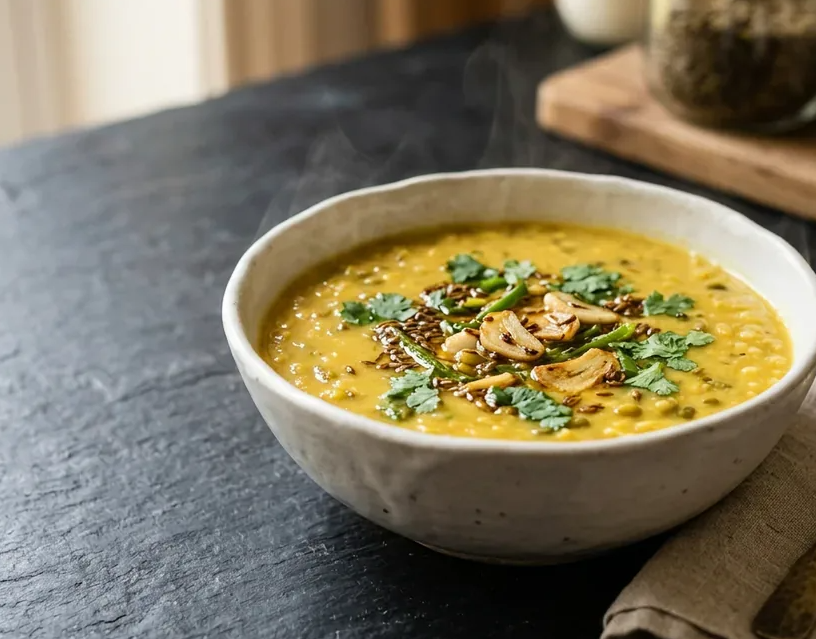
Moong Dal Recipe: Creamy Yellow Dal with Garlic-Cumin Tadka
This everyday yellow moong dal is gentle, deeply comforting, and ready for the table in about 40 minutes. A sizzling tadka of ghee, cumin, garlic, and chilli gives the soft lentils their unforgettable aroma.
An easy moong dal recipe that tastes like a proper meal
There are nights when an elaborate curry is exactly the project you want. And then there are nights when you want a pot of something wholesome, fragrant, and quietly excellent without opening half the spice cupboard. This moong dal recipe belongs to the second category. Split yellow moong dal cooks quickly, breaks down beautifully, and becomes creamy with nothing more complicated than a good stir. It is the kind of food that makes rice, roti, and a few crunchy onions feel like dinner.
In South Asian cooking, dal can mean both the dried pulse and the cooked dish made from it. Here, we are using yellow moong dal: mung beans that have been split and had their green skins removed. They have a mild, lightly nutty taste and an especially soft finish. The magic arrives at the end with tadka (also called tempering or tarka): whole spices and aromatics briefly bloom in hot fat, then are poured over the cooked dal. It is a small final step that makes the whole kitchen smell wonderful.
This is not intended to be the only “authentic” version of moong dal. Indian home cooking is brilliantly regional and personal: one household will add onion, another will add bottle gourd, and another will keep the pot almost bare except for turmeric and a bright tadka. Think of this as a dependable, everyday yellow moong dal tadka that gives you a sound method and lots of room to make it your own.
Ingredients for yellow moong dal
The ingredient list is compact, but every item earns its place. Use good water, fresh garlic, and a ripe tomato; because the recipe is simple, those small choices are noticeable.
For the creamy dal
- Yellow moong dal: 1 cup / about 200 g. Look for split, skinned mung beans, not whole green mung beans. The yellow split variety is the fastest route to a silky dal.
- Water: 3½ cups to cook, plus hot water to adjust later. The exact amount depends on the age of the dal and how thick you like it.
- Turmeric: ½ teaspoon for warm colour and earthy flavour.
- Tomato: 1 small, finely chopped. It adds gentle acidity and body. Skip it if you prefer a cleaner, more buttery-tasting dal.
- Fresh ginger: 1 teaspoon, finely grated. It gives the mild lentils lift without making the dish fiery.
- Fine sea salt: Start with 1 teaspoon. Season again after the dal is smooth and the tadka has been added.
For the garlic-cumin tadka
- Ghee or oil: 1½ tablespoons. Ghee tastes nutty and rich; sunflower, rapeseed, avocado, or coconut oil make a very good vegan moong dal.
- Cumin seeds: 1 teaspoon. Whole seeds crackle in the hot fat and are very different from ground cumin here.
- Asafoetida (hing): A small pinch, optional. It brings a savoury, allium-like depth. Some commercial hing contains wheat, so check the label if you need the recipe to be gluten-free.
- Garlic: 4 cloves, sliced—not minced—so the pieces can turn golden rather than burn instantly.
- Dried red chilli and green chilli: One of each, optional. They provide aroma and warmth; leave out either one for a milder family meal.
- Kashmiri chilli powder: ½ teaspoon for colour and mild heat. Sweet paprika is the closest easy substitute.
- Cilantro and lemon: The fresh finish. Use a little more lemon rather than extra salt if the dal tastes flat.
What can I substitute?
If yellow moong dal is unavailable, red lentils will make a similarly quick and creamy meal, though the flavour and colour will be different. You may need slightly less water and should check them earlier because red lentils soften fast. Do not swap in whole green mung beans without changing the method: they need a longer cook, usually benefit from soaking, and stay more distinct. For the best version of this specific moong dal recipe, use the yellow split dal.
How to make moong dal on the stovetop
Set out a small pan for the tadka before you begin. The final tempering moves quickly, and having the garlic sliced, chilli powder measured, and cilantro ready means you will not be hunting through the fridge while cumin is browning.
- Rinse the dal. Tip the yellow moong dal into a sieve or bowl. Rinse with cool water two or three times, rubbing it lightly with your fingers, until the water is mostly clear. This removes dust and surface starch. Soaking is optional: a 15- to 20-minute soak can shave a few minutes from cooking, but it is absolutely not essential.
- Build the base. Put the rinsed dal in a medium heavy-bottomed saucepan with 3½ cups water, turmeric, chopped tomato, ginger, and 1 teaspoon salt. Bring it just to a boil over medium-high heat. Skim off any foam if you like; it is harmless, but removing it gives a neater pot.
- Simmer until very tender. Reduce the heat to low, partially cover the pot, and simmer for 22 to 28 minutes. Stir now and then, especially during the final ten minutes, so the bottom does not catch. The time is a guide: fresher dal softens faster, while an older bag can take a little longer. The grains should be collapsing easily, not merely cooked through.
- Mash for creaminess. Whisk the pot vigorously for 20 to 30 seconds, or press the dal against the side with a ladle. You do not need a blender. This breaks up enough of the lentils to make the broth velvety while leaving a little pleasant texture. Add hot water, a splash at a time, until it is looser than your ideal consistency—it will thicken as it waits.
- Make the tadka. In a small tadka pan or small skillet, heat the ghee over medium heat. Add cumin seeds. As soon as they sizzle and smell toasty, add the hing, sliced garlic, dried red chilli, and green chilli. Stir for 30 to 60 seconds, watching closely, until the garlic is light golden. Turn off the heat, then stir in Kashmiri chilli powder. Adding the powder off the heat keeps it red and fragrant rather than bitter.
- Finish and serve. Carefully pour the entire sizzling tadka over the moong dal. It should audibly bloom when it lands. Add cilantro and lemon juice, taste, and correct the salt. Serve straight away with rice or roti, and save a spoonful of tadka for the top if you want a dramatic finish.
Five small details that make this dal exceptional
1. Aim for soft, not just tender
For a brothier bean salad, “tender” is perfect. For creamy moong dal tadka, take the dal beyond that stage. The grains should squash effortlessly. Undercooked lentils create a thin liquid with firm grains floating in it; properly cooked moong dal naturally helps thicken its own cooking liquid. If the dal still tastes chalky in the middle, keep simmering and add a splash of water if needed.
2. Control consistency with hot water at the end
Different packs of dal absorb different amounts of water, so do not force the pot to follow a rigid measurement. If your dal becomes too thick, thin it with hot water so the temperature stays steady. If it is too loose, simmer uncovered for a few minutes and mash more of the grains. A restaurant-style dal often has a flowing, pourable consistency; a home-style bowl can be thicker and scoopable. Both are right if they taste good.
3. Brown garlic gently
The difference between golden garlic and burnt garlic can be less than a minute. Keep the heat at medium, use sliced cloves, and take the pan off the burner while the garlic is still pale gold—it will continue to darken in the residual heat. If you smell sharp bitterness, begin the tadka again. It is only a few ingredients, and the clean flavour is worth it.
4. Season in layers, then taste after the tadka
Salt the cooking liquid so the lentils are seasoned from within, but do your final tasting after adding ghee or oil, lemon, and chilli. Fat changes how we perceive salt, and acid makes the whole pot taste more alive. If it needs something but you cannot identify what, the answer is often a pinch of salt or a squeeze of lemon rather than another spice.
5. Keep the tadka aromatic, not aggressively hot
The purpose of the tempering is fragrance. Cumin should smell nutty, garlic sweet and toasted, and chilli warm. The dried red chilli is mainly for aroma, while the green chilli gives fresher heat. Adjust either one to your household’s spice tolerance. For children or a very mild table, make the tadka with cumin and garlic only, then offer chilli oil at the table for anyone who wants it.
Pressure cooker and Instant Pot moong dal
A stovetop pot gives you the most hands-on control, but pressure cooking is ideal when you want truly soft dal without watching the pan. In either case, make the tadka separately at the end; its fresh aroma is much better than a tempering that has pressure-cooked with the lentils.
Electric pressure cooker
Instant Pot method
Combine rinsed dal, 2¾ cups water, turmeric, tomato, ginger, and salt in the insert. Cook on High Pressure for 5 minutes, then let the pressure release naturally for 10 minutes before releasing the rest. Mash, then add hot water as needed. Make the tadka using the sauté function in a dry insert after transferring the dal to a serving bowl, or make it in a small pan on the stove.
Stovetop pressure cooker
Traditional pressure cooker method
Combine the dal ingredients with 2½ to 2¾ cups water. Cook according to your cooker’s manual until it reaches pressure; for many stovetop cookers, 2 whistles on medium heat is a useful starting point. Let pressure drop naturally, then mash and adjust with hot water. Cooker models vary, so use the manufacturer’s instructions as the safety authority.
Make this moong dal recipe your own
Dhaba-style richer dal
Use ghee generously and finish with a small knob of butter. Add a pinch of garam masala only after the heat is off, and top with a swirl of cream if that suits the meal. Keep the basic cumin-garlic tadka—its clarity prevents a richer dal from becoming heavy.
Moong dal with spinach
Stir two large handfuls of chopped spinach into the cooked, mashed dal and simmer for two minutes before the tadka. This is an excellent way to turn the pot into a one-bowl lunch. Kale works too, but give it longer to soften.
Vegetable moong dal
Add small cubes of courgette, carrots, or bottle gourd with the tomato. Choose quick-cooking vegetables and cut them small so they become tender with the dal. If using peas, add them near the end so they stay sweet and green.
Vegan moong dal
Use a neutral oil, rapeseed oil, or coconut oil in place of ghee. The dish remains naturally satisfying because the lentils themselves create such a soft, generous texture. If using hing, choose a gluten-free hing product if needed; many brands blend it with flour.
What to serve with yellow moong dal
A bowl of dal can be a soothing light supper on its own, but it shines as part of a simple plate. Start with steamed basmati rice for a comforting dal-chawal meal. The rice absorbs the saucy lentils, and a little spoonful of pickle on the side adds contrast. Roti, phulka, or warm naan are equally welcome for scooping.
To make the meal feel complete, add one crisp or tangy thing and one vegetable. Cucumber-onion salad with lemon, plain yogurt or a dairy-free raita, quick pickled red onions, papad, roasted cauliflower, or sautéed green beans all work well. A mound of plain rice, this easy moong dal, and a sharp salad is not a compromise dinner—it is a beautiful one.
Storage, freezing, and reheating
Moong dal is an excellent make-ahead dish because its flavour settles well overnight. Cool leftovers promptly, then keep them in a covered container in the refrigerator. The U.S. Department of Agriculture advises refrigerating leftovers within two hours and using refrigerated leftover within three to four days; see its detailed leftover food-safety guidance for full handling advice.
The dal will thicken noticeably in the fridge. Reheat it gently in a saucepan with a splash of water, stirring until steaming hot and smooth. For a fresher second-day bowl, make a tiny new tadka with cumin and garlic before serving. You can freeze cooled dal in individual portions for up to three months for best quality. Thaw overnight in the refrigerator when possible, then reheat with extra water; freezing can make it a touch thicker but does not spoil the flavour.
A sensible nutrition note
Moong dal is a pulse, the edible seed of a legumes and pulses. Like other pulses, it contributes plant protein, complex carbohydrates, and fibre to a meal. Harvard’s Nutrition Source notes that legumes are an inexpensive source of protein, vitamins, complex carbohydrates, and fibre and are naturally low in saturated fat and sodium in their whole, unprocessed form. Read its practical overview of legumes and pulses for broader nutrition context. The final nutrition of a bowl depends on the portion size and additions such as ghee, butter, rice, or bread.
This recipe is food, not medical advice. If you are changing your diet for a health condition, allergy, or medication, use a plan that fits the guidance of a qualified healthcare professional. If beans and lentils are new to your routine, a modest portion and gradual increase can be more comfortable for some people.
Moong dal recipe FAQ
Do I need to soak yellow moong dal?
No. Yellow split moong dal cooks quickly without soaking. A short 15- to 20-minute soak is optional and can make its timing slightly more predictable, but it is not required for a creamy result.
Why is my moong dal watery or too thick?
Dal thickens as it rests. For a thick pot, stir in hot water a little at a time. For a thin pot, simmer uncovered and mash some more of the grains. Get the consistency slightly looser than you want before serving, especially if it will sit for more than a few minutes.
Can I use green moong beans instead?
You can make a different, delicious dal with whole green mung beans, but do not use them as a direct one-for-one swap. They need a longer cooking time, often benefit from soaking, and have a more robust, earthy texture. For this quick creamy yellow moong dal recipe, use split, skinned yellow moong.
Can I make moong dal without onion?
Yes—this recipe already does. Tomato, ginger, garlic, cumin, and hing provide plenty of flavour. You can add finely chopped onion to the cooking base if you enjoy it, but it is not necessary.
Is moong dal the same as lentils?
Moong dal is the split, skinned form of mung beans. It is commonly grouped with “lentils” in everyday recipe language because it is a pulse cooked in a similar way, but botanically mung beans and lentils are different plants. The practical takeaway is simple: yellow moong dal has its own mellow flavour and very fast, creamy cooking behaviour.
Printable recipe card
Creamy Yellow Moong Dal Tadka
A comforting everyday Indian-style dal made from yellow split moong beans and finished with a fragrant garlic-cumin tadka.
Ingredients
- 1 cup (about 200 g) yellow moong dal, rinsed
- 3½ cups water, plus hot water as needed
- ½ tsp ground turmeric
- 1 small tomato, finely chopped
- 1 tsp grated fresh ginger
- 1 tsp fine sea salt, plus more to taste
- 1½ tbsp ghee or neutral oil
- 1 tsp cumin seeds
- Pinch of asafoetida (hing), optional
- 4 garlic cloves, thinly sliced
- 1 dried red chilli, broken in half
- 1 green chilli, slit (optional)
- ½ tsp Kashmiri chilli powder or sweet paprika
- 2 tbsp chopped cilantro
- 1 tsp lemon juice
Instructions
- Combine rinsed dal, water, turmeric, tomato, ginger, and salt in a saucepan. Bring to a boil.
- Partially cover and simmer on low, stirring occasionally, until the dal is very soft, 22–28 minutes.
- Whisk or mash until creamy. Loosen with hot water until pourable and season to taste.
- Heat ghee in a small pan. Sizzle cumin, hing, garlic, dried chilli, and green chilli until garlic is pale golden.
- Take off heat; stir in chilli powder. Pour over the dal, then add cilantro and lemon. Serve hot.
Cook’s note: The cooking time depends on the age and brand of the dal. Keep going until it mashes easily; that tenderness is the secret to a creamy pot.

